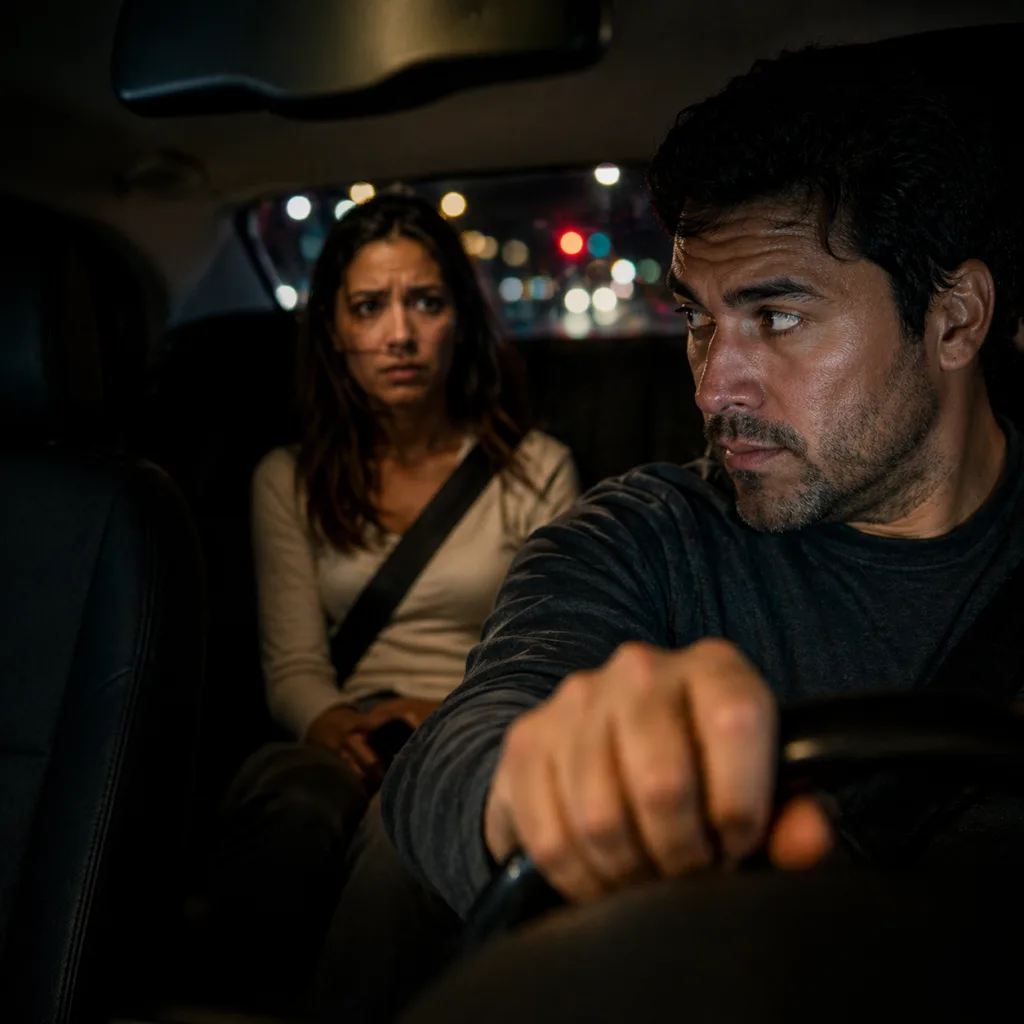
When you open the Uber or Lyft app, you expect the driver who pulls up to be the one in the profile photo — screened, vetted, and approved. But a growing scam is putting Illinois passengers in cars with drivers who were never background-checked at all. The results have been devastating: assaults, sexual assaults, and other attacks on passengers who thought they were safely in the hands of a vetted driver.
If you or a loved one has been assaulted by a rideshare driver in Illinois, you have rights — and you may have a claim against more than just the attacker. At Cronauer Law, we fight for rideshare assault victims across Illinois. Call us today at 815-895-8585 for a free, confidential consultation.
How the Fake or Shared Rideshare Account Scam Works
Uber and Lyft require every driver to pass a background check, submit a valid license, and upload a photo before they can accept rides. But drivers who clear that process have started renting or selling access to their approved accounts on the black market — often through underground Telegram groups, Facebook groups, and word-of-mouth networks.
Here’s the typical setup. An approved driver lets someone else — a friend, a relative, or a complete stranger who paid for access — use the app on their phone. That second driver shows up to pick you up, sometimes in a different car than the one listed, and you never realize the person behind the wheel was never screened. In more sophisticated versions of the scheme, the renter buys a cheap phone with the account pre-loaded and pays a weekly fee to keep using it.
The person actually driving you home could have a criminal record, no valid license, no insurance, and zero accountability to the rideshare platform. Some have used this loophole to deliberately target passengers for robbery, assault, and sexual assault.
Why Uber and Lyft’s Background Checks Fail to Catch It
Uber and Lyft both market themselves on passenger safety. The reality on the ground is different.
The background check only screens the person who signed up. Once that account is active, there is very little ongoing verification of who is actually driving. Real-time identity checks — like random selfie verifications — are inconsistent and easy to beat when the real account holder is standing nearby or has already unlocked the app. Reports from drivers and passengers about mismatched drivers often go nowhere, and the companies have been slow to crack down on the online marketplaces where accounts are bought and sold.
The result is a safety system that looks airtight on paper but has a gaping hole in practice — and Illinois passengers have paid the price.
Common Injuries in Rideshare Assault Cases
Rideshare assaults are not fender-bender cases. The injuries are often physical, psychological, and long-lasting.
Victims we see have suffered sexual assault and rape, physical beatings and strangulation, head and brain injuries from being struck or forced from a moving vehicle, injuries from rideshare crashes caused when an unqualified driver lost control, and severe post-traumatic stress disorder, anxiety, and depression that can last for years.
Many survivors also face ongoing medical costs, lost wages, therapy bills, and the emotional weight of having been attacked by someone they were told was safe. These are real damages, and Illinois law recognizes them.
Your Rights as an Illinois Rideshare Assault Victim
In Illinois, you have the right to pursue both criminal charges against the attacker and a separate civil claim for money damages. The civil case is where most rideshare assault compensation actually comes from, because the attacker personally may have no assets — but the rideshare company does.
You generally have two years from the date of the assault to file a personal injury lawsuit in Illinois. Waiting can cost you critical evidence: trip data, GPS logs, in-app messages, dashcam footage, and driver records all start disappearing quickly. The sooner you get a lawyer involved, the better your chances of holding everyone responsible accountable.
Why Uber or Lyft — Not Just the Attacker — Can Be Held Liable
This is the part the rideshare companies do not want you to know. When a driver attacks a passenger, the company that put that driver in the car with you can be on the hook too.
Illinois law allows claims against rideshare companies for negligent hiring, negligent retention, negligent supervision, and failure to implement reasonable safety measures. If Uber or Lyft knew — or should have known — that accounts were being rented out and failed to fix it, that is a direct safety failure the company owns. The same goes for weak identity verification, ignored complaints about mismatched drivers, and drivers who stayed on the platform after red flags.
Both companies also carry significant liability insurance policies that can apply when a passenger is injured during a ride, including by the driver. Accessing those policies requires the right legal pressure. Uber and Lyft will almost always try to label the driver an “independent contractor” to distance themselves — an experienced attorney knows how to push past that defense.
There’s another legal principle working in your favor here: rideshare companies can be treated as common carriers under Illinois law. Common carriers — like taxis, buses, and trains — are businesses that hold themselves out to the public as transportation providers, and the law holds them to a higher standard of care than an ordinary business. They have a heightened duty to protect their passengers from foreseeable harm, including harm caused by their own drivers. When Uber or Lyft puts a passenger in a vehicle with a driver the company vetted, approved, and dispatched, that common carrier duty attaches. A pattern of account-sharing, weak identity verification, and ignored warning signs is exactly the kind of foreseeable risk the law expects a common carrier to guard against — and failing to do so is a breach of that elevated duty.
What Cronauer Law Can Do for You
At Cronauer Law, we handle rideshare assault cases with the seriousness and discretion they deserve.
We move quickly to preserve trip data, ride history, driver account information, and any available video or audio from the vehicle. We investigate whether the driver who picked you up was the person actually approved on the account, and we dig into the company’s knowledge of account-sharing schemes. We work with medical providers, therapists, and trauma specialists to document the full physical and emotional impact of the attack. We identify every source of recovery — the driver, the account holder, the rideshare company, and applicable insurance policies — and we calculate the true value of your claim, including medical bills, lost income, pain and suffering, and long-term mental health care. And when the companies refuse to offer fair compensation, we are ready to take the case to court.
We handle rideshare assault cases on a contingency basis. You pay nothing unless we recover for you. Every conversation is confidential.
Final Thoughts
A rideshare assault is a betrayal of trust — you did everything you were supposed to do, and a company’s broken safety system put a dangerous person in the driver’s seat. You deserve answers, accountability, and real compensation for what was taken from you.
If you or someone you love was assaulted by an Uber or Lyft driver in Illinois, contact Cronauer Law today at 815-895-8585 for a free, confidential consultation. Call us or fill out our online form — we are ready to help.
Cronauer Law Office: 815-895-8585