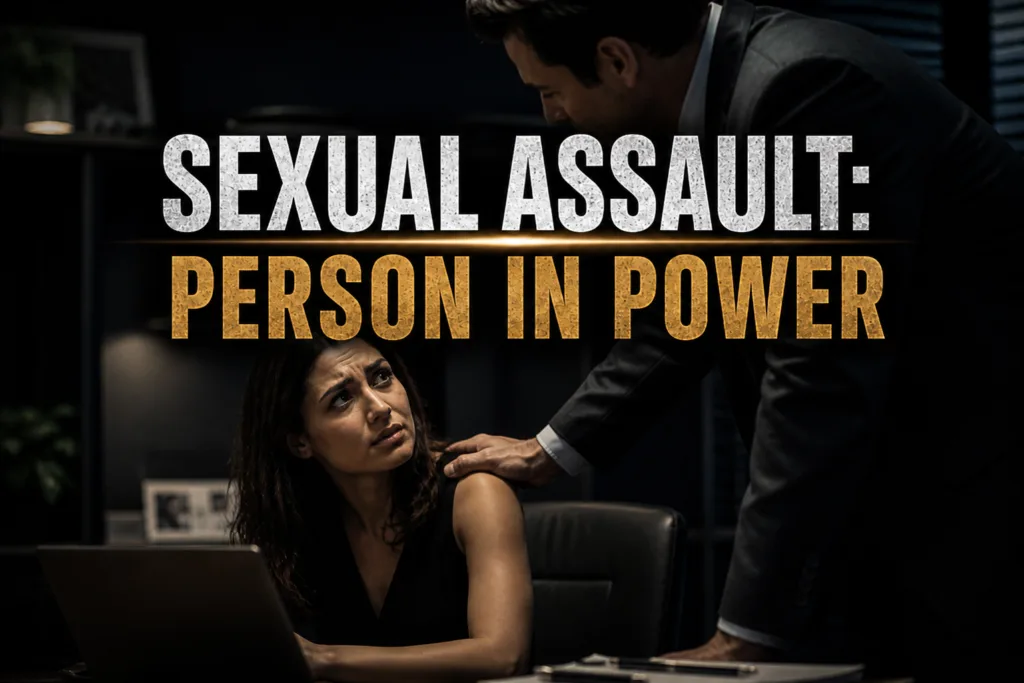
Sexual assault is one of the most personal and traumatic violations a person can experience. When the person responsible is someone in a position of power, the situation can feel even more overwhelming. Survivors may feel confused, afraid, embarrassed, pressured to stay silent, or unsure whether anyone will believe them.
No title, relationship, job, uniform, school role, religious position, professional license, or authority figure gives someone the right to sexually assault another person.
If you or someone you love was sexually assaulted, you may have legal rights. You may also have the right to pursue compensation for the harm caused, especially when another person, business, school, organization, employer, facility, or institution failed to protect you.
For a 100% confidential and free consultation, call 815-895-8585 to speak with Cronauer Law.
A Typical Sexual Assault Situation Involving Power or Authority
Sexual assault can happen in many settings. It may involve a stranger, but many survivors are assaulted by someone they know. In some cases, the person responsible has authority, influence, or control over the survivor’s job, education, medical care, housing, spiritual community, safety, or future opportunities.
Examples may include assault by a supervisor, manager, teacher, coach, doctor, counselor, therapist, clergy member, landlord, caretaker, law enforcement officer, rideshare driver, property employee, facility staff member, or another person trusted with responsibility.
These cases are especially difficult because power can be used to manipulate, threaten, isolate, or silence the survivor. The survivor may fear retaliation. They may worry about losing a job, damaging their reputation, being blamed, being ignored, or facing pressure from the same institution that allowed the person access to them.
Sexual assault is not always just a criminal matter. There may also be a civil case when negligence, unsafe policies, poor hiring, lack of supervision, ignored complaints, inadequate security, or institutional failure contributed to what happened.
For example: If an organization knew or should have known that someone posed a danger and failed to act, that organization may share responsibility. If a business failed to properly screen employees, ignored prior misconduct, or created an unsafe environment, the survivor may have a claim. If a facility, school, employer, or organization protected its reputation instead of protecting people, that can matter legally.
Common Injuries After Sexual Assault
The law recognizes that sexual assault can cause physical, emotional, and financial damage. Survivors often experience trauma that affects nearly every part of life.
Physical injuries may include bruising, cuts, soreness, internal injuries, sexually transmitted infections, pregnancy, sleep disruption, headaches, stomach issues, and stress-related health problems. Some survivors need emergency medical care, testing, medication, follow-up treatment, or long-term care.
Emotional and psychological injuries can be just as serious. Survivors may experience anxiety, depression, panic attacks, nightmares, flashbacks, post-traumatic stress, fear of being alone, fear of returning to work or school, difficulty trusting others, shame, guilt, anger, isolation, or changes in relationships.
Financial harm can also follow. A survivor may miss work, lose income, need counseling, relocate, change jobs, leave school, pay for medical care, or need ongoing mental health support.
Why You Should Hire a Lawyer
A lawyer can help you understand your options without forcing you into a path you are not ready to take.
Criminal cases and civil cases are different. A criminal case is handled by the government and focuses on punishment. A civil case is brought by the survivor and focuses on accountability and compensation for the harm caused. A civil case may exist even if criminal charges are never filed, even if a criminal case is still pending, or even if the survivor is unsure about participating in the criminal process.
An attorney can help identify every potentially responsible party. That may include the person who committed the assault, but it may also include a business, employer, school, facility, property owner, organization, or institution that failed to prevent foreseeable harm.
A lawyer can also help preserve evidence. Important evidence may include text messages, emails, social media messages, security footage, employment records, incident reports, prior complaints, witness statements, medical records, counseling records, photos, app data, access logs, and internal policies. Some of that evidence can disappear quickly if steps are not taken to preserve it.
Most importantly, a lawyer can help protect the survivor from being overwhelmed, dismissed, blamed, or pressured into silence.
What Rights Do Sexual Assault Survivors Have?
Survivors have the right to be taken seriously. They have the right to ask questions. They have the right to seek medical care, counseling, advocacy, and legal guidance. They have the right to consider both criminal and civil options.
In Illinois, sexual assault survivors may also have access to victim advocacy resources and confidential crisis support through sexual assault crisis centers. These services can help survivors understand reporting options, medical care, counseling, and safety planning.
Survivors may also have the right to pursue compensation through a civil claim. Compensation may include medical expenses, counseling costs, lost income, loss of future earning ability, pain and suffering, emotional distress, trauma, loss of normal life, and other damages depending on the facts.
When the assault involved someone in a position of power, the civil case may also examine whether an institution enabled the abuse.
Did the organization fail to investigate prior complaints?
Did it ignore warning signs?
Did it hire someone without proper screening?
Did it allow one-on-one access without safeguards?
Did it prioritize reputation over safety?
Did it fail to supervise someone who had authority over vulnerable people?
These questions matter. Civil law is not only about what happened in the moment of assault. It is also about whether the assault could have been prevented.
What Cronauer Law Can Do
Cronauer Law helps injury victims and survivors through some of the most difficult moments of their lives. In sexual assault cases, our role is to listen, protect, investigate, and pursue accountability with care.
We can help you understand whether you may have a civil claim. We can review the facts, identify responsible parties, preserve evidence, investigate institutional failures, communicate with insurance companies or opposing parties, and pursue compensation for the harm caused.
We can also help coordinate the legal side of the case in a way that respects your privacy and your pace. Survivors should not have to relive trauma unnecessarily just to be heard. Our goal is to make the process as clear and controlled as possible.
Cases involving authority figures require careful investigation. The person who committed the assault may not be the only responsible party. A company, school, facility, church, medical practice, employer, property owner, or other organization may also be accountable if its negligence created the opportunity for harm.
Cronauer Law can help uncover what happened, what warning signs were missed, and whether the responsible parties can be held financially accountable.
Final Thoughts
Sexual assault is never the survivor’s fault. When the person responsible used power, trust, influence, or authority to cause harm, the survivor may feel trapped or silenced. But silence is not the only option.
You have rights. You may have a civil claim. You may be able to pursue accountability not only against the person who assaulted you, but also against an organization or institution that failed to protect you.
If you or someone you love was sexually assaulted, Cronauer Law is here to help you understand your options. Call 815-895-8585 for a 100% confidential and free conversation about your rights and next steps.